Thread by thread
There are faster ways to make a rug. Charles is not interested in them. Everything here is woven by hand, on a loom, the way it has been done for centuries.
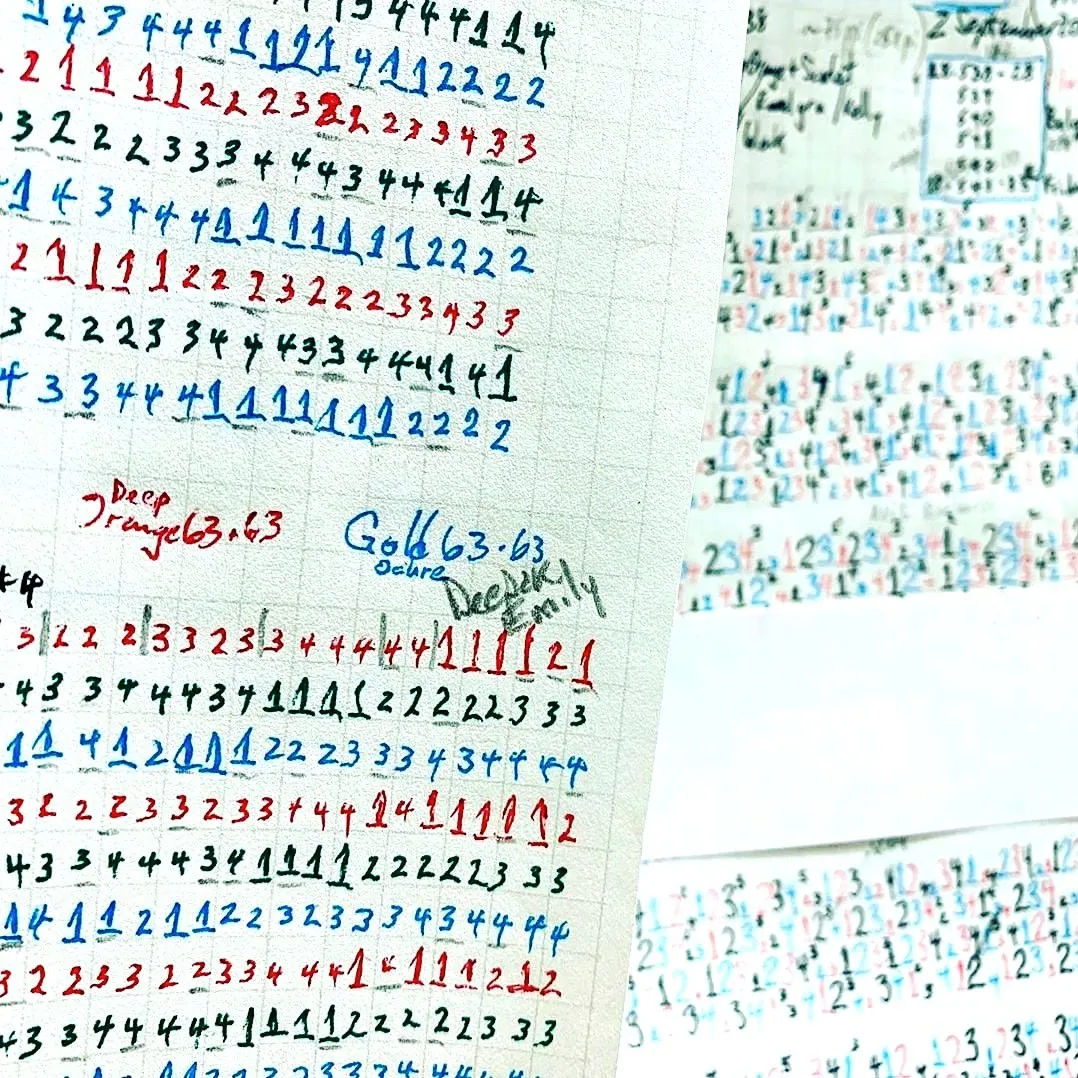
The loom
Charles weaves on a Harrisville loom, a sturdy hardwood floor loom built for exactly this kind of work. Before a single row appears, the loom has to be dressed: hundreds of warp threads measured, threaded, and tensioned by hand. It is slow, deliberate work, and it is where a piece is really decided.
The fibers
The materials are chosen the way a painter chooses pigment. Charles works in linen, in many kinds of wool, in silk, and in alpaca raised nearby. Each behaves differently under the hand: linen is cool and structural, wool is warm and forgiving, silk catches the light, alpaca is soft and quietly luxurious. The fiber is half the design.
The making
Then comes the weaving itself: the shuttle thrown across the warp, pass after pass, the beater pulled firm, the pattern building one row at a time. A rug can take days or weeks. Because it is made by hand, no two pieces are identical, and small variations are not flaws but fingerprints.
What's woven in
Behind the technique are decades of looking. The grass weavings and dance mats of West Africa, the bold cotton dhurries of India, the geometry of Nepalese and Tibetan prayer rugs all live in this work, gathered over a lifetime of travel and reinterpreted on a loom in Narrowsburg.
Want to go deeper? Read how a hand-woven rug is made, the traditions woven into every piece, or a weaver's materials.