Charles Hadley Blanchard
The Dyberry Weaver
Charles Hadley Blanchard has spent more than half a century at the loom. He began his life as an artist in a Georgia arts community in the late 1960s, and he has been weaving ever since, by hand, the way it has been done for centuries.
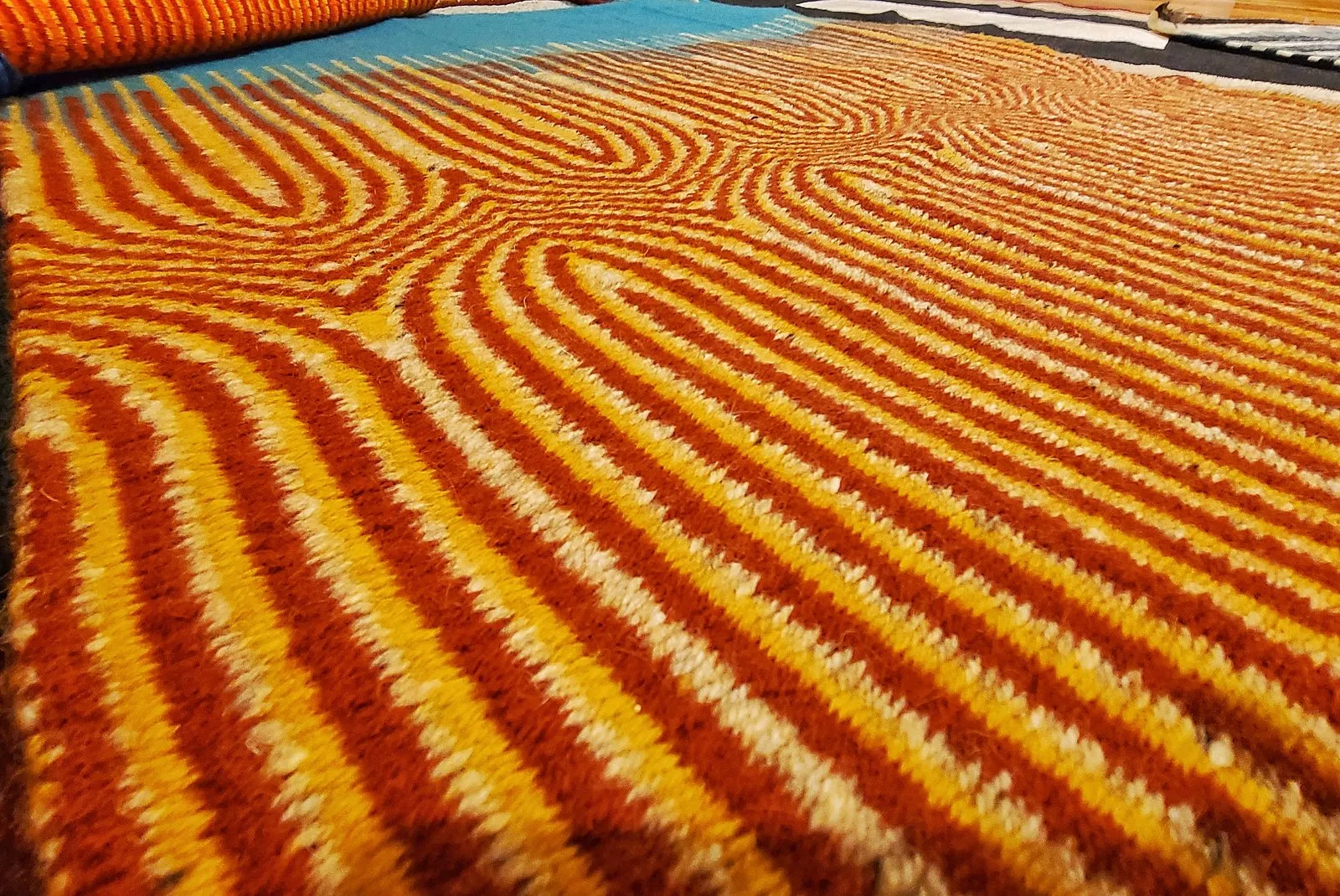
The years between have been spent gathering. Charles traveled widely through Europe, Africa, and Asia, and he came home a student of the world's weaving traditions. You can read those travels in his work: the quiet grass weavings of West Africa, the bold flat color of an Indian dhurrie, the tight geometry of a Himalayan prayer rug. They meet, in his hands, as something wholly his own.
He works in linen, in many kinds of wool, in silk, and in alpaca raised nearby, choosing fiber the way a painter chooses pigment. The studio takes its name, Dyberry, from a small hamlet in the Pennsylvania hills. Today the loom lives on Main Street in Narrowsburg, New York, where Charles still weaves rugs, ponchos, handbags, and tapestries, one at a time. No two are alike, and that is the point.
That insistence on the one-of-a-kind is the heart of the work. In an age of things made by the thousand, a hand-woven piece is the opposite: slow, particular, and marked everywhere by the hand that made it. The small irregularities are not mistakes. They are the signature.
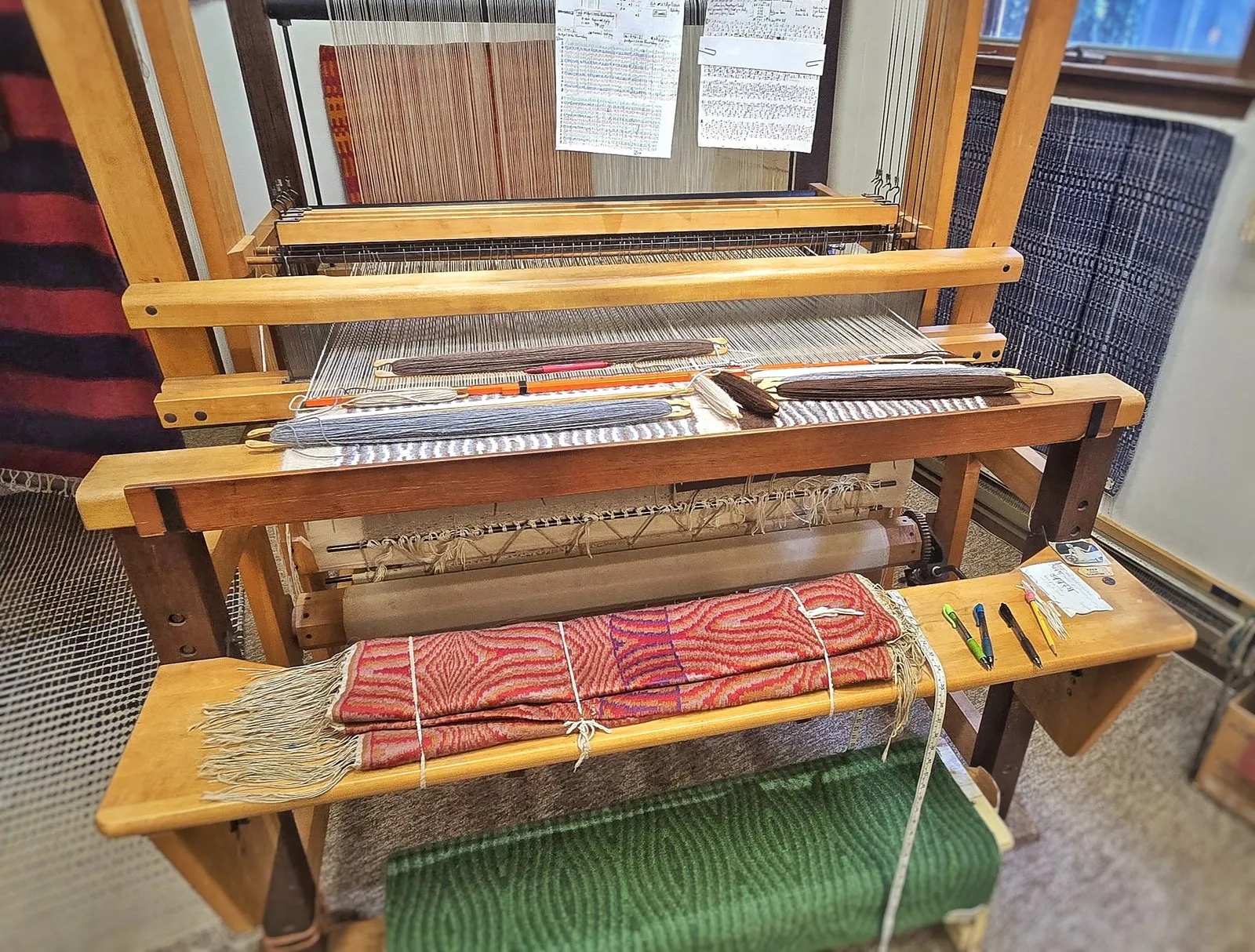
More than half a century in, Charles is still at the loom most days, still choosing fiber by eye and throwing the shuttle by hand. To understand the work, it helps to understand the craft behind it. Read more in the journal, see it taking shape on the loom, or browse the gallery.
What's woven in
West Africa
The delicate grass weavings and dance mats: rhythm, restraint, and the logic of fiber pulled from the land.
India
The bold colors and graphic designs of cotton dhurries, woven flat and unafraid of strong pattern.
Nepal & Tibet
The intricate geometry of Himalayan prayer rugs, where pattern carries meaning.
The Celts & Islam
Elegant interlace and disciplined ornament, two traditions built on line and repetition.